New Year, New You Sale Ends Fri, Jan 30 | Lowest Tuition! Explore Now >>

Get Up to 50% OFF Sitewide—New Year, New You Sale

LAST CHANCE! OFFER ENDS Fri, Jan 30
00 Days
:
00 Hrs
:
00 Mins
:
00 Secs
Explore Sale circle arrow right
Natural Filler Alternative

Autologous Fat Grafting Training

Master fat harvesting, processing, and reinjection techniques for comprehensive facial rejuvenation and body contouring. Achieve 80%+ revascularization rates with results lasting 7+ years.

1-Day Course Hands-On Training Certificate Included

Starting at

$1,299

300+ Reviews
20,000+ Graduates
25+ US Locations

1-Day

Intensive Course

8:30am - 4:30pm

Hands-On

Live Demonstrations

Expert Supervision

25+

US Locations

Nationwide

Certificate

Of Completion

Included

Course Overview

Autologous Fat Transfer Training

Autologous fat grafting has seen explosive growth in market size, revenues, and patient acceptance due to improved methods for harvesting and reintroduction techniques. Patients prefer the use of their own natural fat over synthetic fillers for facial rejuvenation and body contouring.

Typical facial augmentation procedures using fat transfer yield 80%+ revascularization rates and provide results that can last 7 years or more. Newer centrifuge technologies allow for greater preservation of harvested fat, while micro cannulas enable precise placement and volume control.

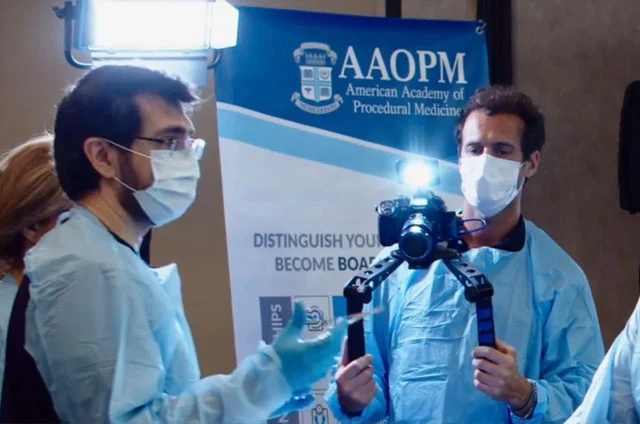
The AAOPM Fat Transfer Training Course teaches you every step of the autologous fat grafting process—from tumescent anesthesia and harvesting to processing and transplantation. You'll learn from board-certified physicians who successfully perform these procedures in their own practices.

Fat Grafting Training Workshop
Manual Aspiration Technique
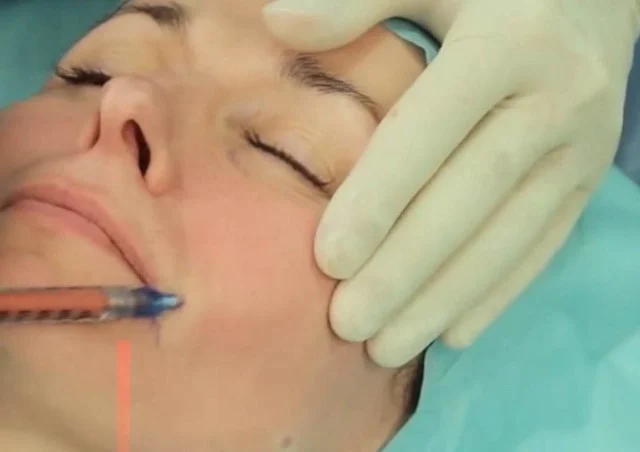
Fat Transfer Reinjection Technique
Cannula Technique

Why Patients Choose Fat Transfer

Fat grafting is a minimally invasive procedure that allows for harvesting adipose fat using either manual aspiration (MAL) or power assisted liposuction (PAL). Common donor sites include the abdomen, gluteal fold, and lateral thigh where fat is typically stored and easily harvested.

Unlike synthetic fillers, fat transfer uses the patient's own tissue—it's non-immunogenic with no risk of allergic reaction. Results are semi-permanent to permanent, and patients can achieve greater volume than with hyaluronic acid fillers. The fat also contains estrogen receptors that improve skin appearance.

The average price for fat grafting procedures ranges from $2,500 to $3,000 with minimal product costs, resulting in excellent profit margins for your practice.

What You'll Learn

Fat Transfer Techniques & Equipment

Master the complete fat grafting workflow from harvesting to transplantation with the latest equipment technologies.

Fat Harvesting

Master manual aspiration (MAL) and power-assisted liposuction (PAL) techniques for harvesting adipose fat from donor sites including abdomen, gluteal fold, and lateral thigh.

Tumescent Anesthesia

Learn Klein formulation and modified tumescent protocols for safe, effective local anesthesia with minimal patient discomfort during fat harvesting procedures.

Fat Processing

Utilize dual-spin centrifuge systems like Harvest Technologies™ and Encyte™ to cleanse and isolate undamaged fat cells for optimal viability and revascularization.

Facial Rejuvenation

Precise fat reinjection techniques for facial fat pads, treating hollows, rhytids, and volume loss. Learn surgical marking and fat pad anatomy for natural-looking results.

Body Contouring

Advanced fat transfer techniques for buttock augmentation, hand rejuvenation, breast enhancement, and correction of lipoatrophy from trauma or surgery.

Fat Cryopreservation

Learn to freeze harvested fat for up to 30 days with 80% viability rates, reducing expense and time for touch-ups and repeat procedures.

Flexible Training Options

Choose Your Learning Format for Fat Grafting Training

Whether you prefer hands-on training with live demonstrations or the convenience of remote learning, we have a format that fits your schedule and learning style.

Most Popular

In-Person Training

Get hands-on experience with fat harvesting, processing, and reinjection techniques under expert supervision. Practice with anatomical models in a clinical setting.

  • Live demonstrations with anatomical models
  • Direct faculty supervision & feedback
  • 25+ locations nationwide
  • Small group sizes for personalized learning
  • Network with fellow practitioners
Find In-Person Dates
Remote Option

Livestream Training

Join our interactive livestream sessions from anywhere. Watch live demonstrations, ask questions in real-time, and complete your didactic training remotely.

  • Learn from home or office
  • Live Q&A with expert instructors
  • HD video demonstrations
  • Interactive case discussions
  • Complete didactic portion remotely
Explore Livestream Dates

Eligibility

Who Should Attend This Course?

This course is designed for licensed healthcare professionals looking to add fat transfer procedures to their practice.

Physicians

MD, DO

Nurse Practitioners

NP, APRN

Physician Assistants

PA, PA-C

Dentists

DDS, DMD

Ideal for Aesthetic & Primary Care Practices

If you know how to place dermal fillers and have an aesthetic eye, fat grafting integrates perfectly with your practice.

Course Information

About the Fat Grafting Training Course

Learning Objectives

Upon completion of this course, participants will be able to:

  1. Understand the aging face and evaluate patients with aesthetic needs. Describe alternative treatments, filler choices, and expected outcomes for fat transfer candidates.
  2. Master tumescent anesthesia protocols including Klein formulation and modified options for fat harvesting procedures.
  3. Learn and evaluate various fat harvesting equipment technologies including Tissu-Trans Filtron 500™, Lipo-Vage™, and Tulip™ Instruments.
  4. Gain proficiency in fat transplantation techniques for facial and body areas with proper surgical marking and volume considerations.
  5. Understand dual-spin centrifuge systems for fat concentration, cleansing, and enhanced viability including Harvest Technologies™ and Encyte™.
  6. Learn to market your new aesthetic procedure and effectively integrate fat grafting services into your practice.

Equipment & Technologies Covered

Disposable Fat Transfer Systems
  • Tissu-Trans Filtron 500™ - Closed-loop fat transfer
  • Lipo-Vage™ - Disposable harvesting and processing
  • Tulip™ Instruments - Specialty disposable cannulas
  • Vented blunt-tip cannulas for multiple threads
  • Facial contour cannulas for bone areas
Centrifuge Systems
  • Harvest Technologies™ - Dual-spin dedicated system
  • Encyte™ - Fat concentration and cleansing
  • Closed systems minimizing exposure
  • Reproducible results with enhanced viability
  • Alternative uses for PRP procedures
Harvesting Instruments
  • Manual aspiration (MAL) snap-syringes
  • Power-assisted liposuction (PAL) systems
  • Low vacuum aspiration devices
  • Tumescent infiltration cannulas
  • Sterile field setup for office procedures
Reinjection Equipment
  • Micro cannulas for precise fat placement
  • Blunt-tip cannulas of various sizes
  • Nano-fat preparation equipment
  • Fat Autograft Muscle Injection (FAMI) tools
  • Needle injection for small areas

Course Details

The adipose fat once cleansed and isolated allows for excess fat to be frozen for 30 days with viability rates of almost 80%, reducing expense and time for re-harvesting for minor touch-ups or repeat procedures. Implanted fat also contains estrogen receptors that improve skin appearance and value to the patient.

The AAOPM Autologous Fat Transfer Training Course allows physicians to expand tissue augment procedures with the "natural" filler. Fat is non-immunogenic and when placed properly is semi-permanent or even permanent. During your training you will observe and study fat transfer methods from Board Certified Physicians who successfully perform these procedures.

The revenue for procedures ranges from $2,500 to $3,000 depending on volume, extent of revision, geographic region, and physician fees. The average procedure time is 30-45 minutes. Unlike dermal fillers, there's minimal product cost since you're using the patient's own fat.

The AAOPM Fat Transfer Workshop includes a complete digital resource guide of forms, informed consents, and standardized protocols. You will receive all course materials presented during the course including a detailed color manual and other materials to help incorporate these procedures within your practice.

Course Agenda

8:30–9:00am

Registration

Check-in and receive course materials.

9:00–10:00am

Introduction & Patient Selection

Market size, benefits to patients, viability of offering fat grafting procedures. Pre-operative assessment, preparation, and patient evaluation. Introduction to tumescent anesthesia.

10:00–10:15am

Break

10:15–11:15am

Tumescent Anesthesia & Harvesting

Klein formulation, modified tumescent options. Protocols and guidelines including volumes by body site. Harvesting procedures using various liposuction techniques.

11:15am–12:30pm

Gender Differences & Fat Histology

Male/female differences in fat quality, ease of removal, and contouring. Histology, specific areas of adherence, and adverse events.

12:30–1:30pm

Lunch

On your own

1:30–3:15pm

Fat Processing & Injection Techniques

Manual and power aspiration, centrifuging, new equipment technologies. Facial fat pad anatomy, injection methods, established protocols. Live demonstration using anatomical models.

3:15–3:30pm

Break

3:30–4:30pm

Body Augmentation & Post-Procedure

Buttock augmentation, hand and breast augmentation. Post-procedure review, touch-ups. Before and after gallery and complete procedure video.

Note: This is a summary agenda. The full course agenda will be emailed prior to your course date.

Your Investment, Your Future

The Business of Fat Grafting: Your ROI

Fat transfer procedures offer exceptional profit margins with minimal product costs. Here's what you can expect to earn.

Procedure Revenue

High-Margin Natural Filler

Unlike dermal fillers with significant product costs, fat grafting uses the patient's own tissue. Your costs are primarily time and disposable supplies, resulting in exceptional profit margins.

$2,500

Facial Fat Transfer

$3,000

Hand Rejuvenation

$5,000+

Body Contouring

Calculate Your Earning Potential

Adjust the sliders to see how much you could earn with fat grafting procedures.

4
1 12
$2,750
$1,500 $6,000

Monthly

$11,000

Quarterly

$33,000

Yearly

$132,000

ROI Timeline: Pay back your $1,299 course investment in just 1 procedure

Industry averages based on $2,750/procedure. Your results may vary based on location and market.

Fast ROI

Recoup Your Investment After Just One Procedure

With a single facial fat transfer procedure averaging $2,500+, you cover the entire cost of your training. Unlike fillers with high product costs, fat grafting profits go straight to your bottom line.

Course Investment

$1,299

→ ROI in 1 procedure

Why Fat Grafting Is a Smart Investment

Minimal Product Costs

Unlike fillers that require expensive products, fat grafting uses the patient's own tissue—virtually eliminating product costs.

Repeat Patients

Touch-ups and additional areas create ongoing revenue. Frozen fat storage makes follow-up procedures quick and profitable.

Growing Demand

Patients increasingly prefer natural alternatives. Fat grafting offers semi-permanent results lasting 7+ years.

Fat Grafting Course Frequently Asked Questions

Autologous fat grafting (also called fat transfer, lipofilling, or AFT) is a minimally invasive procedure where fat is harvested from one area of the patient's body using liposuction, processed to isolate healthy fat cells, and reinjected into another area for volume restoration. Unlike synthetic fillers, fat transfer uses the patient's own tissue for natural, long-lasting results.

The Autologous Fat Grafting Training course costs $1,299 and includes hands-on training with live demonstrations, all course materials and protocols, certificate of completion, and access to our online Physician Portal with forms and videos.

This fat transfer certification course is designed for licensed healthcare professionals including physicians (MD, DO), nurse practitioners (NP, APRN), physician assistants (PA, PA-C), and dentists (DDS, DMD) who want to add fat grafting procedures to their practice.

You'll learn both manual aspiration (MAL) using snap-syringes and power-assisted liposuction (PAL) techniques. The course covers tumescent anesthesia protocols, donor site selection (abdomen, gluteal fold, lateral thigh), and proper sterile technique for fat harvesting.

The course covers disposable fat transfer systems including Tissu-Trans Filtron 500™, Lipo-Vage™, and Tulip™ Instruments. You'll also learn to use dual-spin centrifuge systems like Harvest Technologies™ and Encyte™ for fat processing.

When performed properly, autologous fat grafting results can last 7+ years or even permanently in some cases. The key is achieving proper vascularization of the transferred fat, which the course covers in detail. Typical facial procedures yield 80%+ revascularization rates.

Fat transfer can be used for facial rejuvenation (cheeks, temples, nasolabial folds, lips, under-eyes), hand rejuvenation, buttock augmentation, breast enhancement, and correction of lipoatrophy from trauma or surgery. The course covers injection techniques for multiple treatment areas.

Average pricing ranges from $2,500-$3,000 for facial fat transfer, $3,000+ for hand rejuvenation, and $5,000+ for body contouring procedures. Unlike dermal fillers, there's minimal product cost since you're using the patient's own fat, resulting in excellent profit margins.

The hands-on portion includes live demonstrations using anatomical models showing fat harvesting, processing, and reinjection techniques. You'll observe proper surgical marking, fat pad anatomy, and precise injection placement under faculty supervision.

Yes, the course covers fat cryopreservation techniques. Harvested adipose fat can be frozen for up to 30 days with viability rates of approximately 80%, reducing expense and time for touch-ups or repeat procedures.

Manufacturers now offer disposable kits that allow you to perform fat grafting with minimal capital investment. The course discusses equipment options, costs, and ROI analysis for different systems. Many physicians start with disposable systems before investing in dedicated centrifuge equipment.

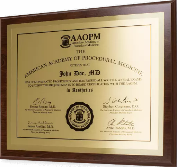
Yes, upon successful completion you'll receive an official Certificate of Completion from AAOPM demonstrating your fat grafting training credentials to patients, employers, and insurance companies.

AAOPM offers autologous fat grafting training at over 25 locations nationwide including New York, Los Angeles, Chicago, Miami, Dallas, Atlanta, Las Vegas, Orlando, San Francisco, Houston, and many more cities.

EXPAND YOUR AESTHETIC SERVICES

Ready to master autologous fat grafting?

Register now for the AAOPM Fat Transfer Training Course and add this high-demand, high-margin procedure to your practice.

Limited spots available for hands-on seminars. Secure your seat today!

Continue Learning

Related Training Courses

Expand your aesthetic medicine skills with these complementary courses

Upcoming Autologous Fat Transfer Training Events

Empire-Virtual-Training

2 Courses
Autologous Fat Transfer
Fri Apr 17
Livestream
Autologous Fat Transfer
Fri Nov 6
Livestream
certification

Board Certification Pathways


The American Academy of Procedural Medicine offers Board Certification Pathways for Physicians in Aesthetics, Functional Medicine, and Pain Management. AAOPM is proud to offer certification courses for physicians and nurses in New York, Las Vegas, Orlando, Chicago, Atlanta, Nashville, Los Angeles, Dallas, Detroit, Houston, Fort Lauderdale, San Francisco and many other cities.

Call today to find out how to get your Certification Plaque Free.

circle arrow right 888.998.1297

LEGAL

Duplicating, using or copying any portion of this website will subject the offender to significant statutory damages and attorney fees regardless of any citation or attribution of this work.

Copyright 2026 by American Academy of Procedural Medicine

This site uses cookies. By continuing to use this website, you agree to their use.