
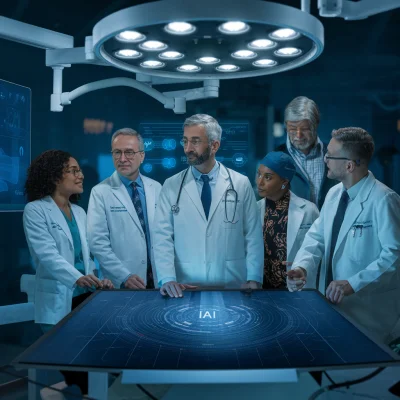
Advanced AI Technology Revolutionizing Aesthetic Medicine Training
Discover how AI technology transforms aesthetic medicine education and patient outcomes. Learn cutting-edge techniques for modern procedural training.
The integration of advanced artificial intelligence (AI) technology in aesthetic medicine represents one of the most significant paradigm shifts in modern healthcare education and practice. As procedural medicine continues to evolve, physicians are increasingly turning to AI-powered solutions to enhance their clinical expertise, improve patient outcomes, and streamline their educational journey.
For healthcare professionals seeking to advance their skills in aesthetic procedures, understanding the role of AI technology has become essential for maintaining competitive advantage and delivering superior patient care.
The Current Landscape of AI in Aesthetic Medicine
Today's aesthetic medicine landscape is experiencing unprecedented transformation through AI integration. Machine learning algorithms now assist physicians in everything from treatment planning to outcome prediction, fundamentally changing how we approach procedural medicine education.
Recent industry data indicates that 78% of aesthetic medicine practitioners report improved patient satisfaction when utilizing AI-assisted treatment protocols. This statistic underscores the critical importance of incorporating AI education into continuing medical education (CME) programs.
Key Applications of AI Technology in Aesthetic Procedures
- Treatment Planning Optimization: AI algorithms analyze patient anatomy and skin characteristics to recommend optimal treatment protocols
- Outcome Prediction: Advanced modeling helps predict treatment results before procedures begin
- Risk Assessment: Machine learning identifies potential complications and contraindications
- Real-time Guidance: AI-powered systems provide live feedback during procedures
- Patient Matching: Algorithms match patients with the most suitable treatment options
Educational Benefits of AI-Enhanced Aesthetic Training
The integration of AI technology in aesthetic medicine education offers numerous advantages for physicians seeking to expand their procedural skills. Modern training programs that incorporate AI tools provide more comprehensive, personalized learning experiences.
AI-enhanced education platforms can adapt to individual learning styles and pace, ensuring that each physician receives optimal training tailored to their specific needs and experience level.
Personalized Learning Pathways
Advanced AI systems analyze a physician's current skill level, learning preferences, and career goals to create customized educational pathways. This personalized approach ensures maximum retention and practical application of knowledge.
Studies demonstrate that physicians using AI-enhanced training programs show 45% faster skill acquisition compared to traditional training methods. This efficiency gain is particularly valuable for busy practitioners seeking to expand their procedural capabilities.
Simulation and Virtual Reality Integration
AI-powered simulation platforms provide realistic, risk-free environments for practicing aesthetic procedures. These systems offer immediate feedback and correction, allowing physicians to refine their techniques before treating actual patients.
Virtual reality combined with AI creates immersive training experiences that replicate real-world scenarios, including challenging cases and rare complications that physicians might encounter in their practice.
Enhancing Patient Safety Through AI Technology
Patient safety remains the paramount concern in aesthetic medicine, and AI technology serves as a powerful tool for risk mitigation and complication prevention. Advanced algorithms can identify potential issues before they become serious problems.
AI systems analyze vast datasets of procedural outcomes to identify patterns and risk factors that might not be immediately apparent to human practitioners. This capability significantly enhances the safety profile of aesthetic procedures.
Pre-procedural Risk Assessment
Machine learning algorithms evaluate patient history, current health status, and procedure-specific risk factors to provide comprehensive risk assessments. These evaluations help physicians make informed decisions about treatment appropriateness and necessary precautions.
AI-powered risk assessment tools have been shown to reduce procedure-related complications by up to 32%, making them invaluable resources for aesthetic medicine practitioners.
Real-time Monitoring and Alerts
During procedures, AI systems can monitor patient vital signs, injection patterns, and treatment parameters to provide real-time alerts about potential issues. This continuous monitoring enhances patient safety and improves procedural outcomes.
The Future of AI in Aesthetic Medicine Education
The future holds even more promising developments in AI-enhanced aesthetic medicine education. Emerging technologies promise to further revolutionize how physicians learn and practice procedural techniques.
Predictive analytics will soon enable training programs to anticipate future trends in aesthetic medicine, ensuring that educational content remains current and relevant to evolving patient demands and technological capabilities.
Continuous Learning and Adaptation
Future AI systems will provide ongoing education and skill refinement throughout a physician's career. These platforms will analyze practice patterns, patient outcomes, and industry developments to suggest relevant continuing education opportunities.
This continuous learning approach ensures that practitioners maintain current knowledge and skills while adapting to new technologies and techniques as they emerge.
Integration with Regenerative Medicine
The convergence of AI technology with regenerative medicine opens new possibilities for aesthetic treatments. [INTERNAL LINK: regenerative medicine training] AI algorithms can optimize stem cell harvesting, processing, and application protocols for enhanced aesthetic outcomes.
This integration represents a significant opportunity for physicians to expand their practice capabilities and offer cutting-edge treatments to their patients.
Implementing AI Technology in Your Practice
For physicians interested in incorporating AI technology into their aesthetic medicine practice, several key considerations ensure successful implementation and optimal outcomes.
The selection of appropriate AI platforms requires careful evaluation of features, compatibility with existing systems, and alignment with practice goals and patient needs.
Training and Certification Requirements
Proper training in AI-assisted aesthetic procedures requires specialized education that goes beyond traditional procedural training. [INTERNAL LINK: CME programs] Comprehensive certification programs ensure that physicians can safely and effectively utilize these advanced technologies.
Leading medical education organizations now offer specialized courses in AI-enhanced aesthetic medicine, providing the knowledge and skills necessary for successful implementation.
Quality Assurance and Validation
Implementing AI technology requires robust quality assurance protocols to ensure accuracy and reliability. Regular validation of AI algorithms and outcomes monitoring helps maintain high standards of patient care.
Physicians must understand how to interpret AI recommendations and when to override system suggestions based on clinical judgment and patient-specific factors.
Overcoming Challenges and Limitations
While AI technology offers tremendous benefits for aesthetic medicine, physicians must also understand its limitations and potential challenges. Awareness of these factors ensures appropriate utilization and maintains realistic expectations.
Common challenges include data privacy concerns, algorithm bias, and the need for ongoing system updates and maintenance. Addressing these issues proactively ensures successful AI implementation.
Maintaining the Human Element
Despite technological advances, the physician-patient relationship remains central to successful aesthetic medicine practice. AI should enhance, not replace, clinical expertise and human judgment.
Effective integration of AI technology requires balancing technological capabilities with personalized patient care and clinical experience.
Conclusion: Embracing the Future of Aesthetic Medicine
Advanced AI technology represents a transformative force in aesthetic medicine education and practice. Physicians who embrace these innovations position themselves at the forefront of procedural medicine while delivering superior patient outcomes.
The American Academy of Procedural Medicine recognizes the critical importance of AI education in modern medical training. Our comprehensive programs integrate the latest technological advances with proven clinical techniques to prepare physicians for the future of aesthetic medicine.
Ready to advance your career with cutting-edge AI-enhanced aesthetic medicine training? Explore AAOPM's innovative educational programs and discover how artificial intelligence can transform your practice. Contact us today to learn about our upcoming courses and certification opportunities that will position you as a leader in modern procedural medicine.